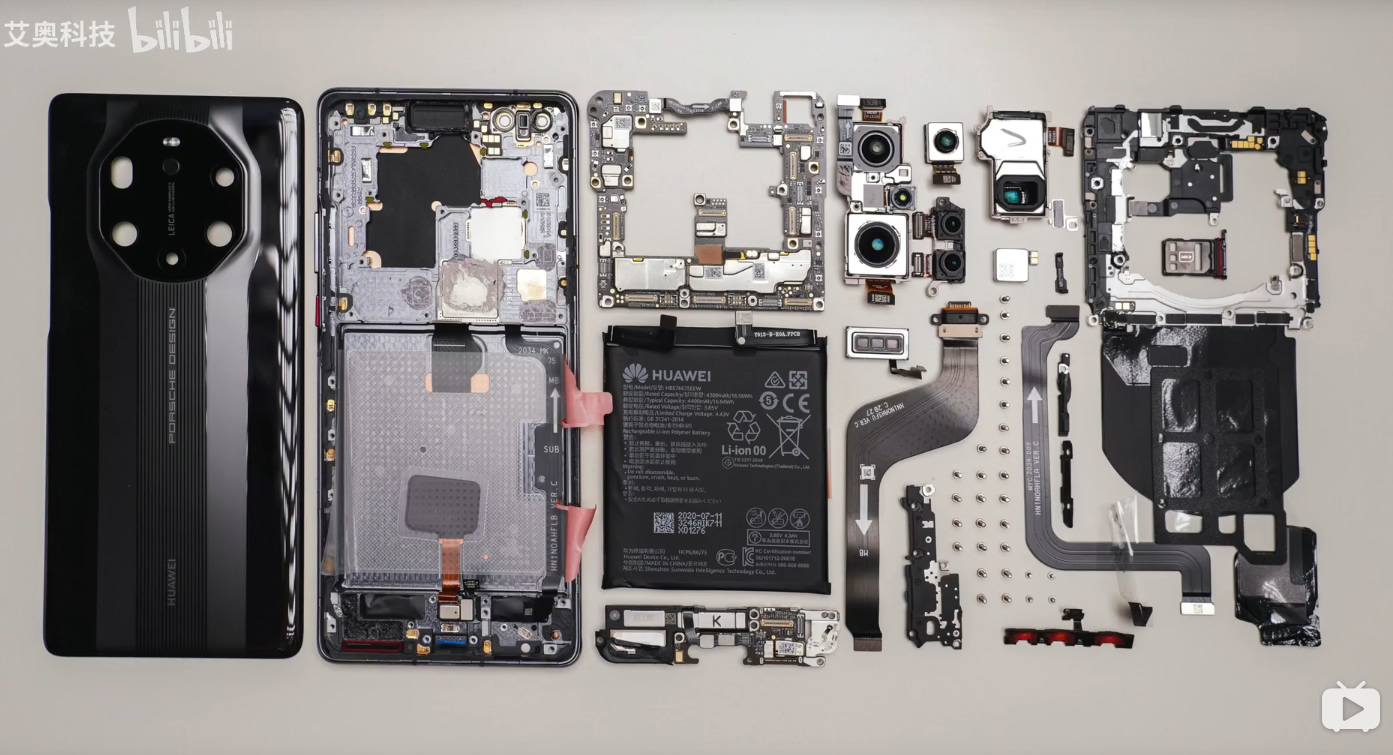
A few days ago, Aio Technology released a teardown video of the Mate 40 Pro. Yesterday, they released a teardown video of the Mate 40 RS and compared the two phones’ internal structures. From this, we can see the hardware improvements of the Mate 40 RS.
First, heat the back cover for about 3 minutes, then use a suction cup and a pry tool to remove the back cover. It is worth mentioning that the back cover weighs 40 grams.
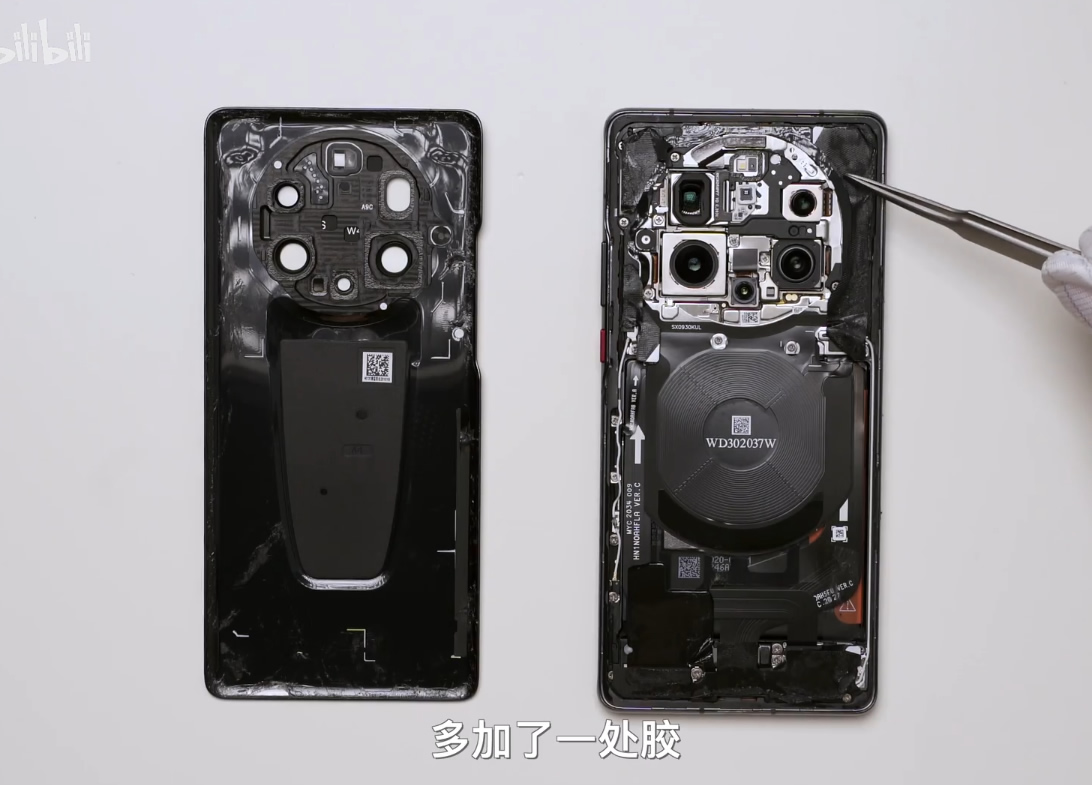
The Mate 40 RS still uses a three-stage design. Its middle and lower parts are almost the same as the Mate 40 Pro, only the upper part is different.
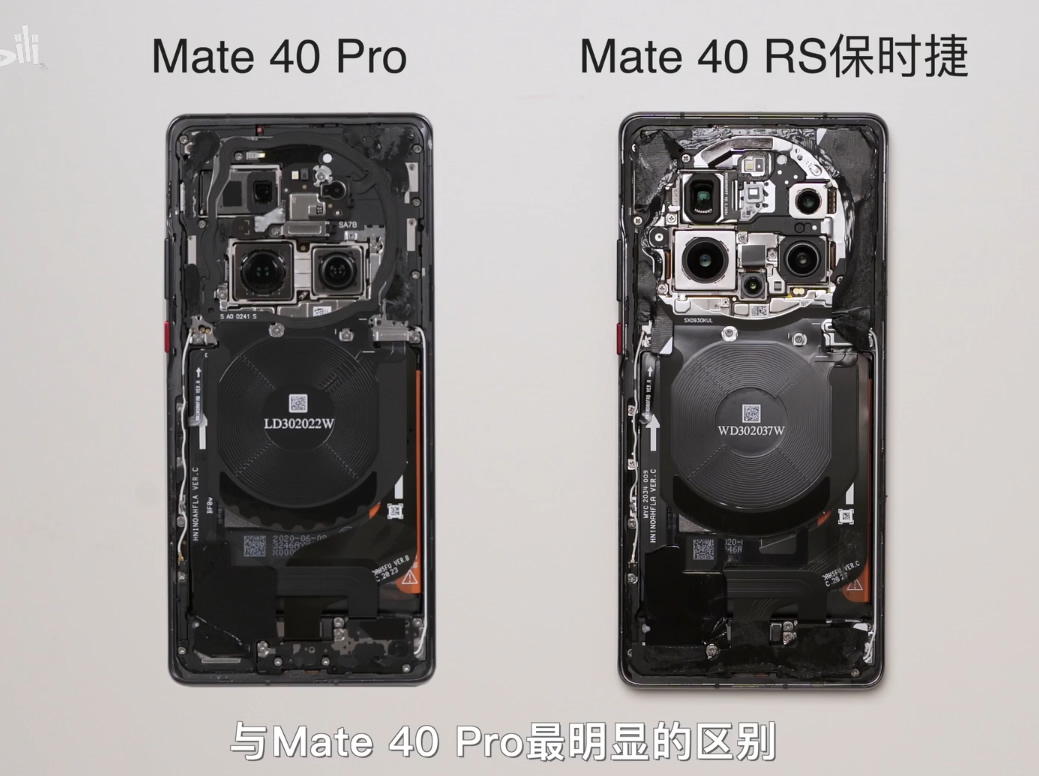
Then, remove the screws securing the motherboard cover and peel off the tape at the bottom. This motherboard cover integrates an NFC induction coil, a wireless charging module, and an infrared temperature sensor.

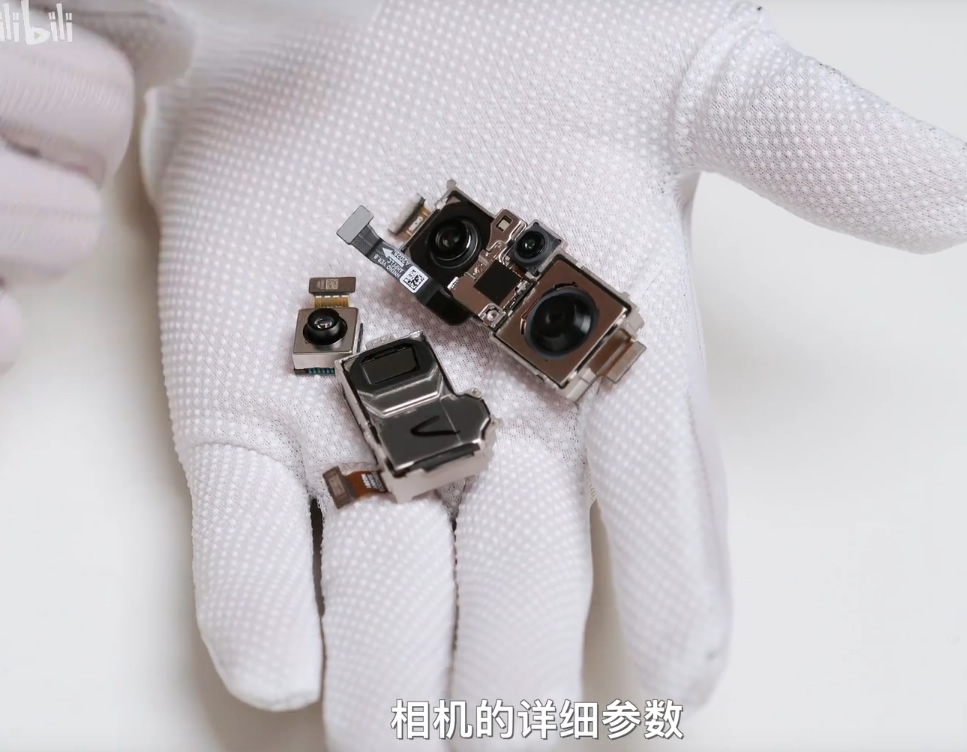
Then remove all screws, disconnect all cables from the motherboard, and remove the camera module and the motherboard.
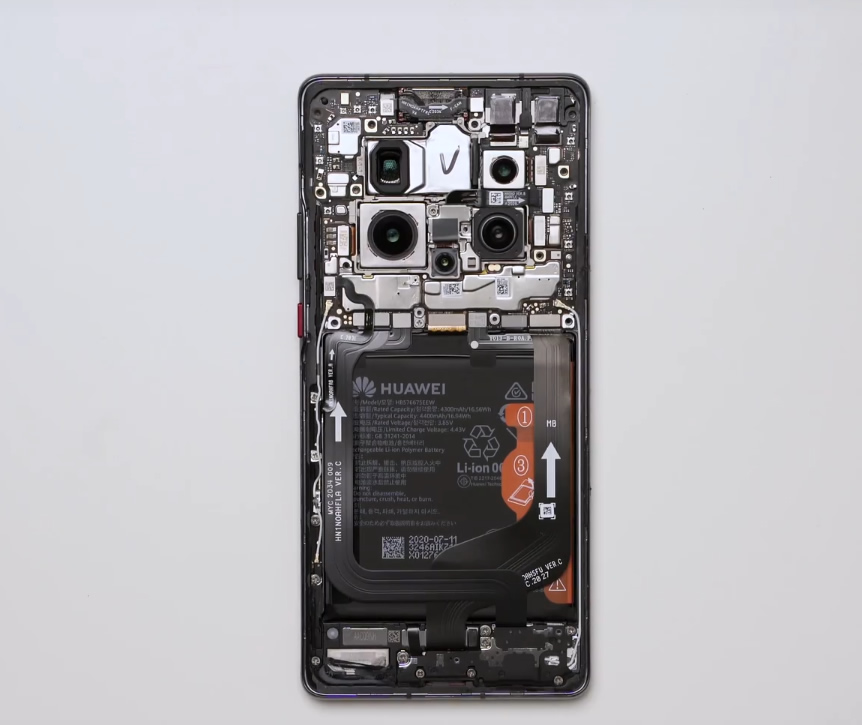
To install the camera, the middle of the motherboard is completely hollowed out. Then remove the metal shield on the motherboard.

We found the HiSilicon logo on this ROM chip, indicating that it was developed by Huawei. Previously, a blogger tested that the read and write performance of the Huawei Mate 40 Pro can reach about twice the speed of UFS 3.1.
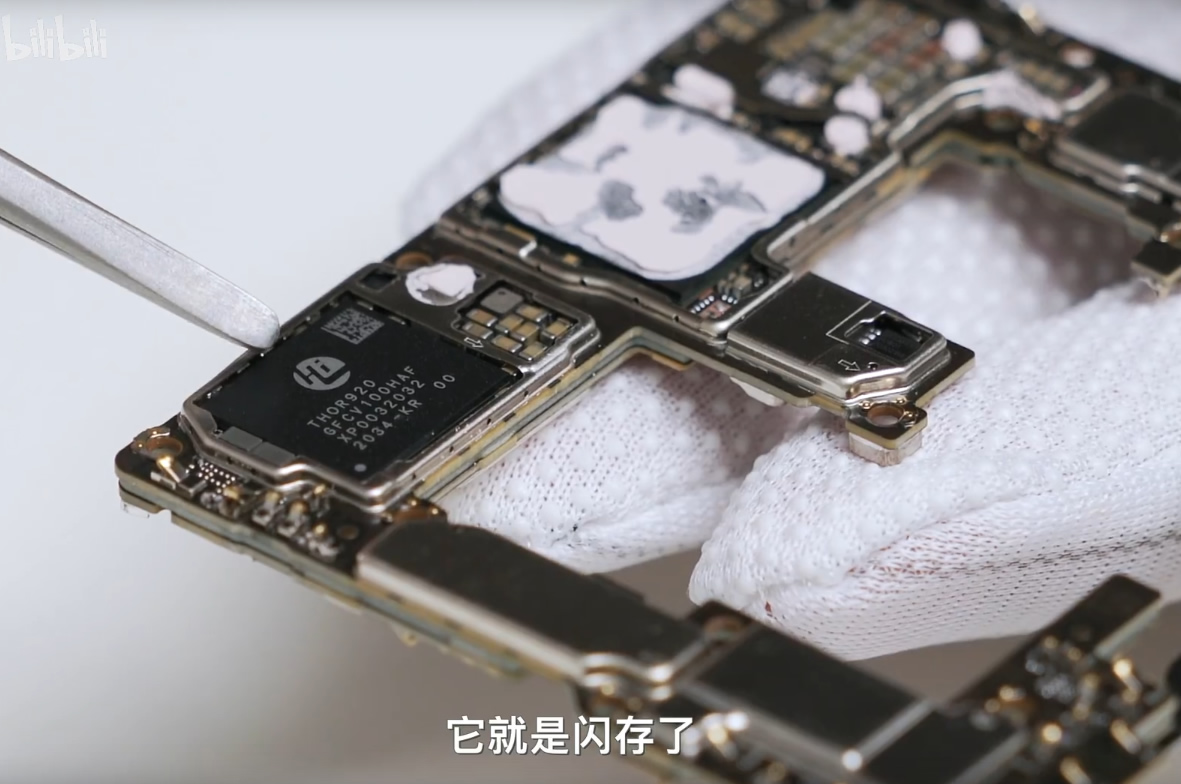
According to reports, the Huawei Mate 40 Pro and above models use HiSilicon’s self-developed SFS 1.0 ROM. Compared with UFS 3.1, the random read and write speeds are almost doubled. Currently, the average sequential read speed of UFS 3.1 is about 1800 MB/s, the sequential write speed is about 700 MB/s, and the random write speed is about 200-300 MB/s.
In the latest Huawei Mate 40 Pro benchmark, we found that the phone has a sequential read speed of 1966 MB/s, a sequential write speed of 1280 MB/s, a random read speed of 383 MB/s, and a random write speed of 548 MB/s. Its random write speed is twice that of UFS 3.1.
SFS is a new type of flash memory developed by Huawei. However, because Huawei rarely mentions this new flash memory technology and has never promoted it at mobile phone conferences, we currently know very little about it.
Source: bilibili