In this article, we will disassemble a Lenovo ThinkPad T14s. We will remove the bottom case, and then access the RAM, M.2 SSD, wireless network card, and other components.
This time, we disassembled the ThinkPad T14s Ryzen edition. The Intel edition is basically the same as the Ryzen edition. This laptop features a Ryzen 7 PRO 4750U processor, 16GB of memory, and a 512GB M.2 NVMe SSD.
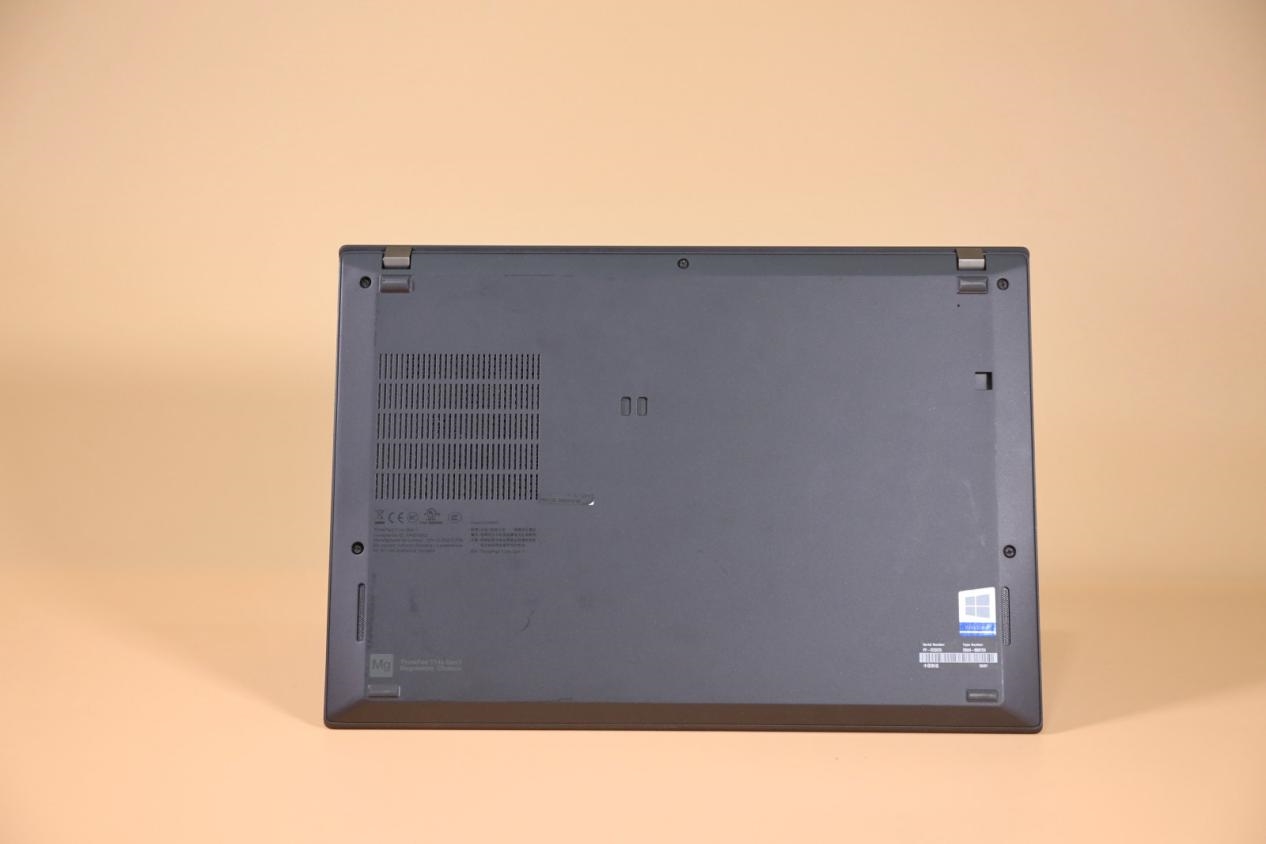
The bottom cover is made of an aluminum-magnesium alloy. There are many fan inlets on the bottom cover, and several small holes for connecting a docking station.
Loosen all the screws securing the bottom cover, and then use an old credit card or thin plastic tool to slowly pry open the bottom cover
After removing the bottom cover, you can access most of the internal components, including the SSD, wireless card, fan and heatsink, speakers, battery, and motherboard.
The cooling module of the ThinkPad T14s consists of a fan and a heat pipe. For a thin and light business laptop, this cooling configuration is sufficient.

This laptop has 16GB of memory soldered to the motherboard and without spare memory slots, so it cannot be upgraded. In addition, all IO ports on the ThinkPad T14s are reinforced with alloy plates to prevent loosening.
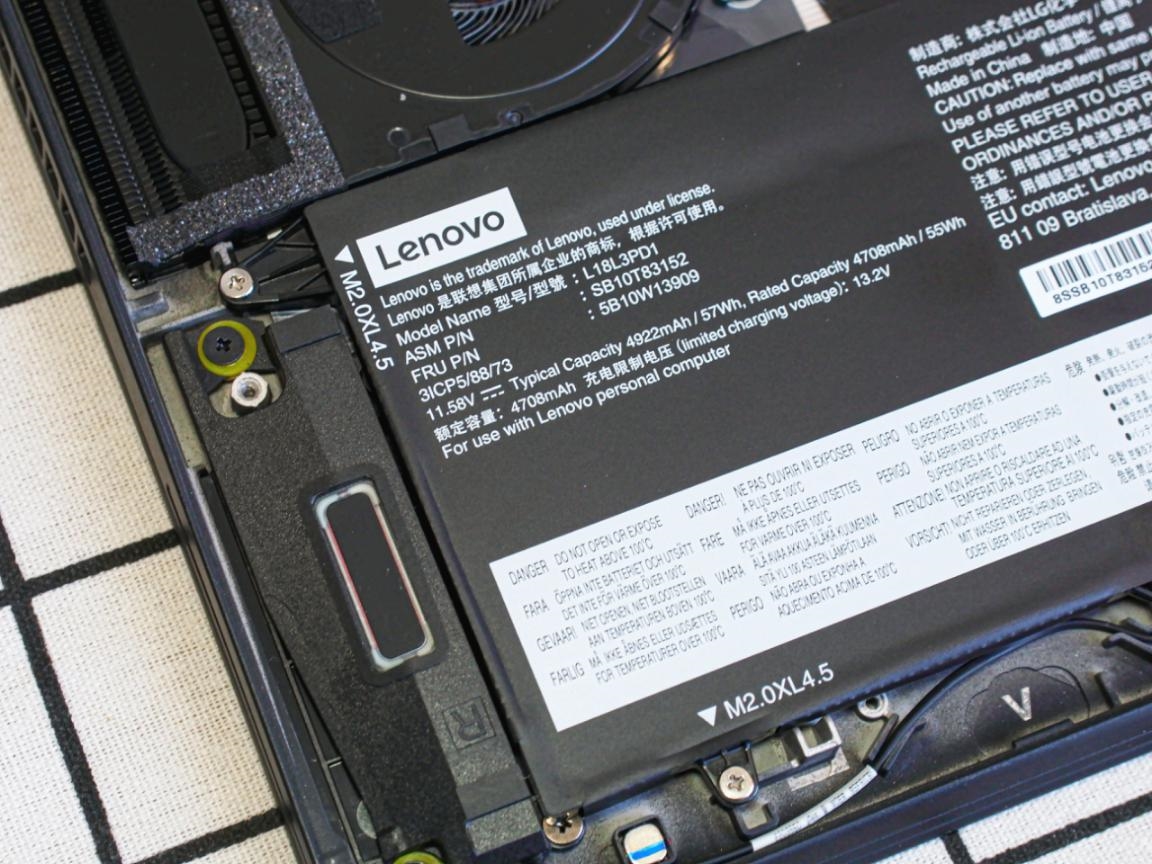
It comes with a 57Wh lithium-ion battery. The battery life is quite promising.
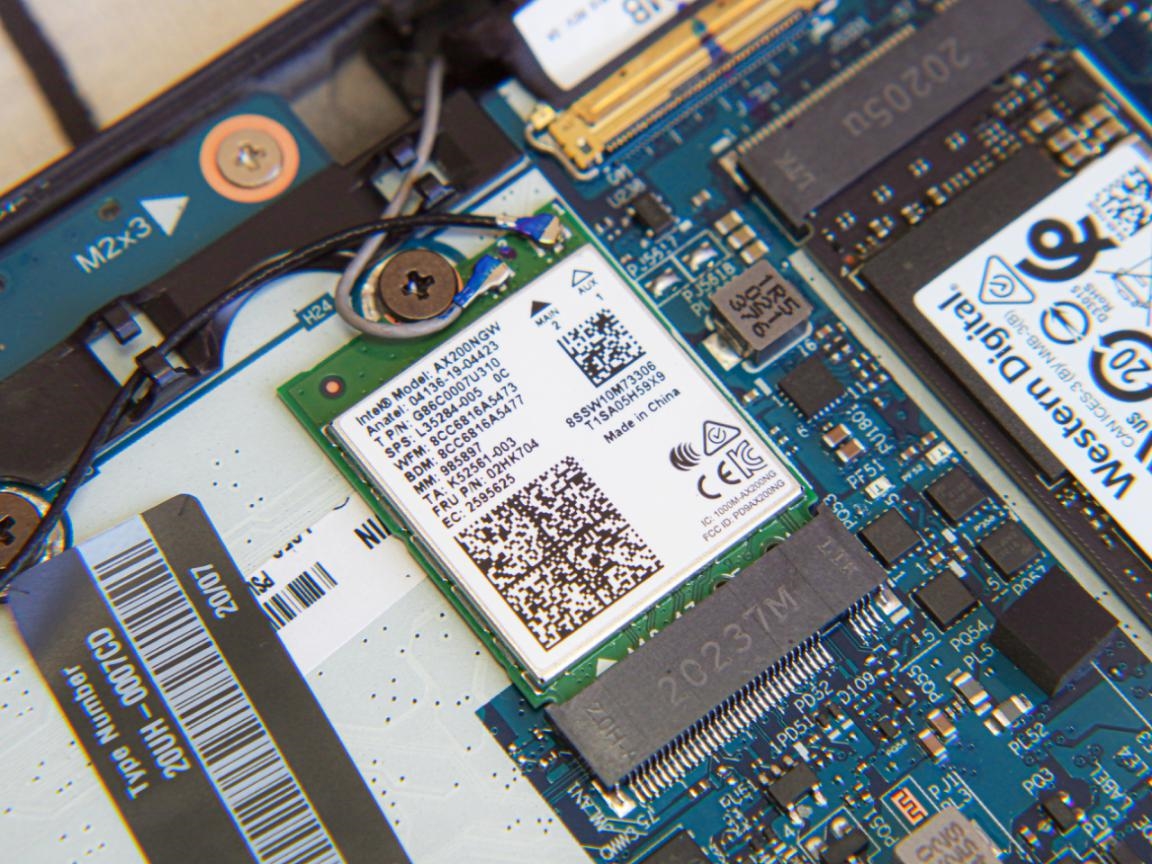
Its wireless network card model is AX200NGW, supporting Wi-Fi 6, 160 MHz bandwidth, and 2×2 MIMO, with a theoretical maximum speed of up to 2.4 Gbps.
There is a 2280 M.2 SSD on the right side of the motherboard, and a short M.2 slot is reserved next to it. If necessary, you can add an M.2 SSD.
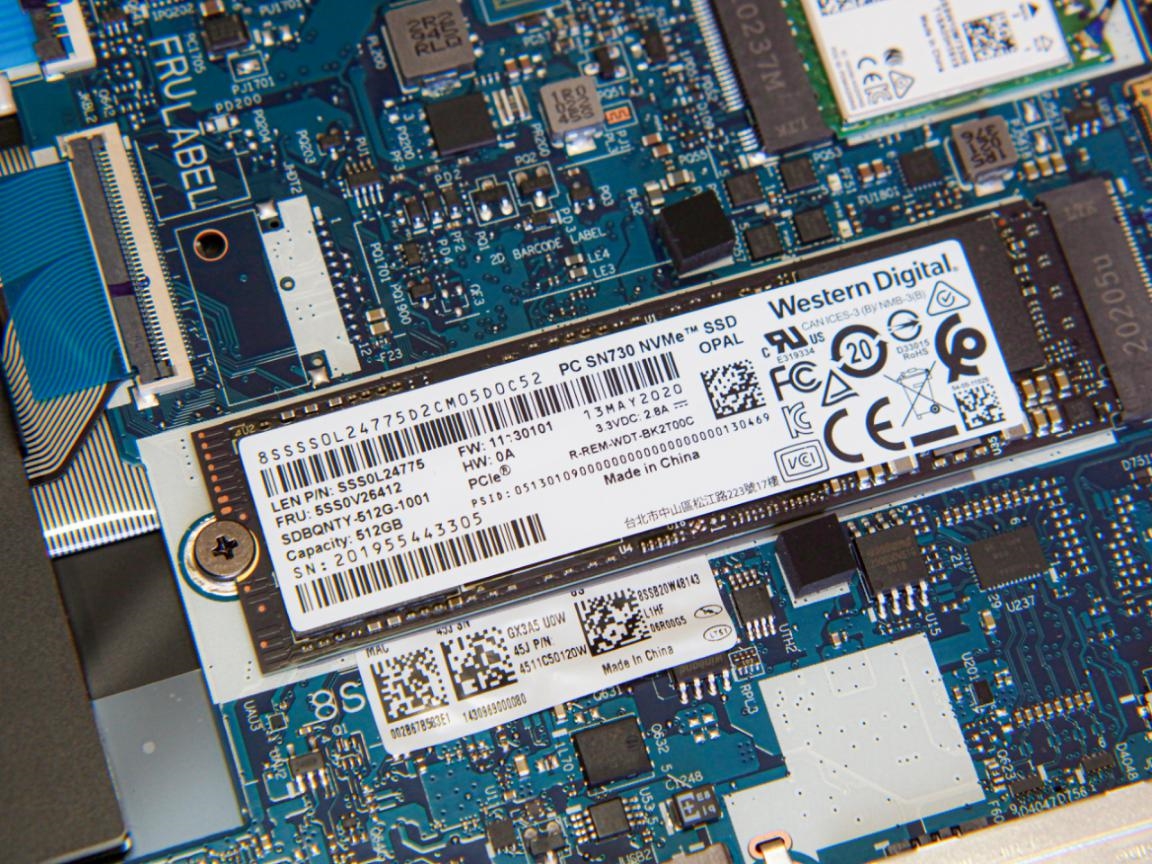
The SSD model is Western Digital SN730 and supports the NVMe protocol.
In the AS SSD Benchmark test, the SSD’s sequential read speed was 2229.05 MB/s, sequential write speed was 1164.27 MB/s, and random read and write speeds were 42.44 MB/s and 130 MB/s, respectively.
In the CrystalDiskMark test, the measured sequential read and write speeds were 2861 MB/s and 2699 MB/s, respectively, while the random read and write speeds were 38.9 MB/s and 84.03 MB/s, respectively.