The camera has been one of the important hardware components of smartphones. To meet users’ photography needs, phone manufacturers have launched many smartphones equipped with three to four cameras. By adding cameras, smartphones can enable functions such as optical zoom and depth-of-field control, thereby greatly improving photo quality.
Xiaomi recently filed a new patent for a very special foldable phone, which would allow its front and rear cameras to work simultaneously. The patent was submitted by Beijing Xiaomi Mobile Software Co., Ltd. to the China National Intellectual Property Administration. The patent has been approved and was officially announced on June 23, 2020.
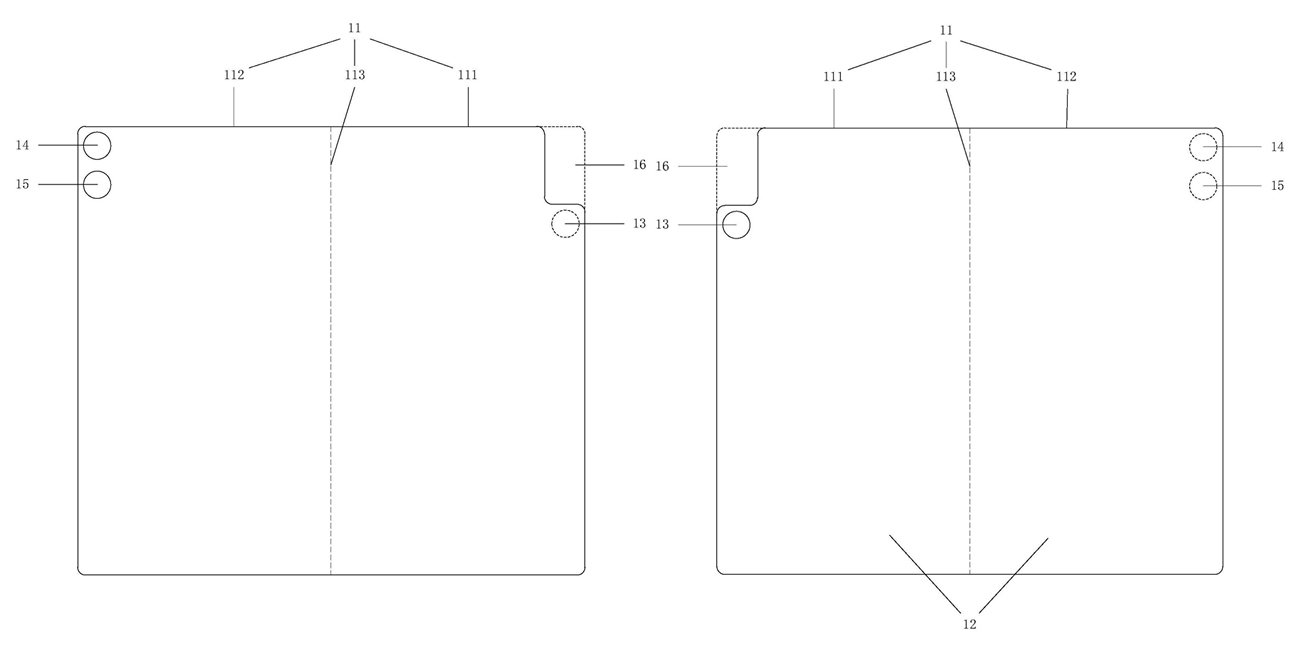
In relevant technologies, smartphones usually have separate front and rear camera modules. The front camera is typically used for selfies and video calls, while the rear camera is usually used for taking photos. However, to meet users’ photography needs, increasing the number of front or rear cameras not only occupies the physical space on the smartphone but also increases hardware costs.
The technical solution provided by the patent can include the following beneficial effects: By setting a gap on the first screen of a foldable phone, when the phone is folded, the cameras on both the second screen and the first screen can be used simultaneously to shoot in the same direction, and multiple functions can be realized without increasing the number of cameras on the foldable phone. Each camera can enhance shooting capability in a single direction, meet users’ shooting needs, save layout space, reduce the difficulty of layout design, lower the hardware cost of the foldable phone, and improve the product’s market competitiveness.
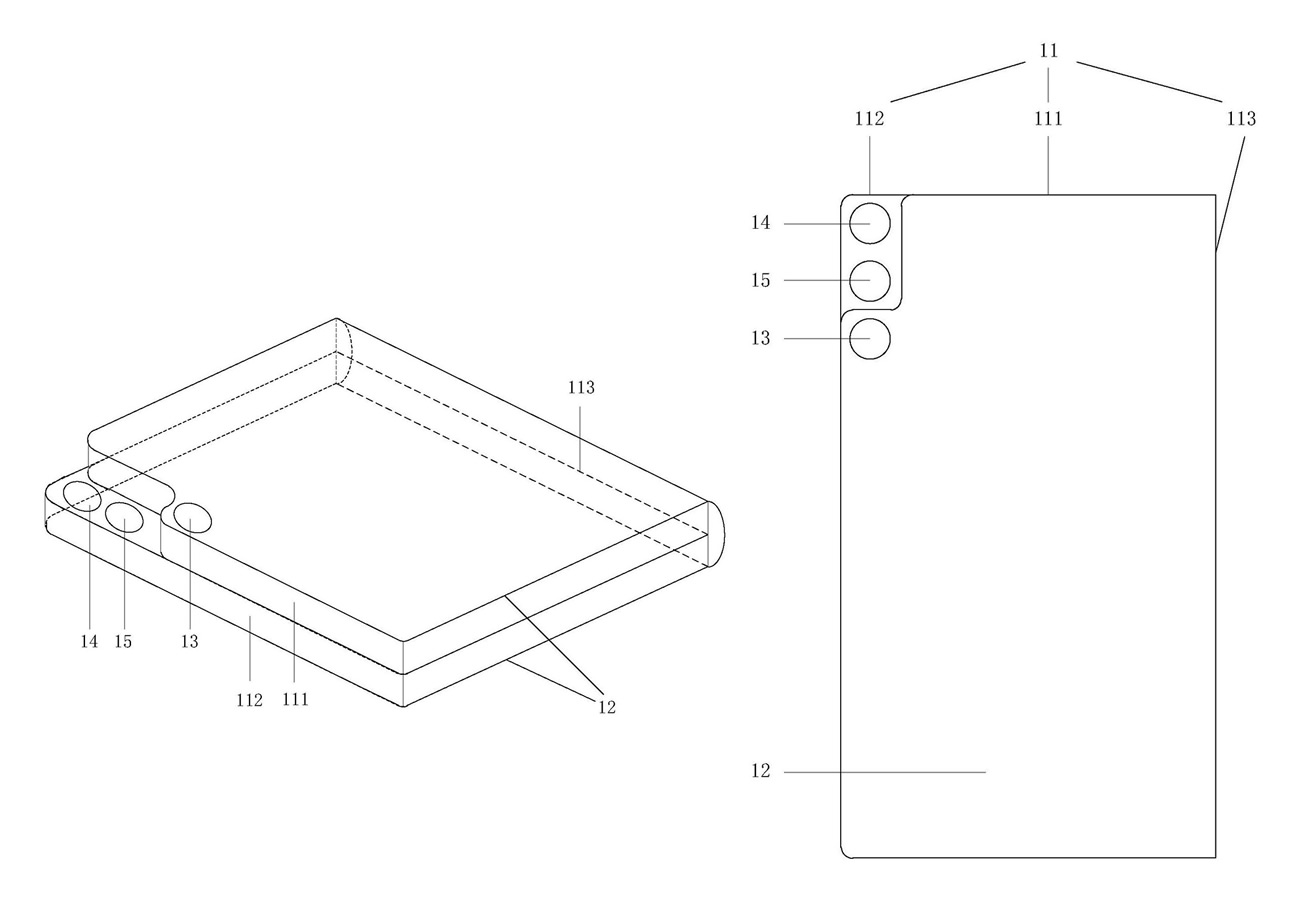
When the camera 13 of the foldable phone is facing the user, the cameras 14 and 15 are also facing the user. At this time, the user can call one or more of cameras 13, 14, and 15 via the foldable mobile phone for self-shooting and video calling, and use cameras 13, 14, and 15 as the front camera at the same time.
When the camera 13 of the foldable phone is facing away from the user, the user can also use one or more of the cameras 13, 14, and 15 for shooting. Camera 15 also serves as the rear camera, enhancing the foldable phone’s rear camera functionality.
When the phone is folded, the gap is also used for the flash to emit light, which can enhance the exposure when taking photos with a foldable phone. Especially in dark places, the flash can instantly increase exposure, making the subject brighter and enhancing the photo effect.