The U.S. government and Huawei are currently at odds on multiple issues. At the beginning of last year, the U.S. imposed a ban on Huawei, prohibiting it from doing business with American companies. The most challenging aspect of this ban is that Huawei cannot use Google Mobile Services. This has impacted its smartphone business outside of China, as its new models cannot include Google apps and other services. However, in 2019, Huawei still sold about 240 million phones, second only to Samsung in sales.
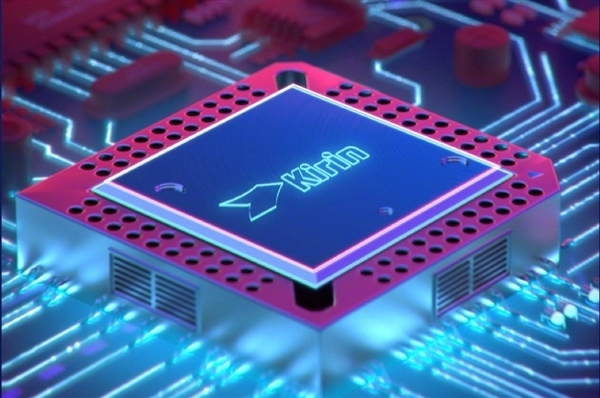 Obviously, Huawei has not suffered the severe blow that the United States anticipated. A few weeks ago, the U.S. Department of Commerce announced new regulations. Under the new rules, non-U.S. companies using U.S. technology are prohibited from producing chips for Huawei. The apparent target of these new regulations is Taiwan’s chip manufacturer TSMC. This Taiwanese foundry is the core technical support behind Huawei’s HiSilicon Kirin chips. If TSMC is unable to continue supplying Huawei, the production chain for Kirin chips will face disruption.
As an alternative, Huawei has begun cooperating with SMIC. Unfortunately, SMIC’s most advanced process is only 14nm, which means it can only handle manufacturing for Huawei’s mid-range and entry-level devices. As the largest and most technologically advanced foundry in China, SMIC has achieved mass production with its 14nm process. Huawei has also become an important customer for them. It has begun to manufacture the Kirin 710A processor using its 14nm process. However, due to U.S. policy restrictions, the cooperation still faces risks. In a recent notice to Huawei, SMIC mentioned the potential restrictive measures it could face.
SMIC stated that the current global economy is facing setbacks, multilateralism is under pressure, and international financial markets are experiencing increased volatility. In particular, trade frictions between China and the United States have adversely affected the production, operations, and market expectations of some enterprises. The company adheres to international business practices, conscientiously complies with the laws and regulations of the countries and regions where it engages in production and business activities, and has operated in compliance with the law since its establishment.
In May 2019, the U.S. Department of Commerce added several Chinese companies to the Entity List. A year later, in May 2020, the U.S. Department of Commerce revised the Foreign Direct Product Rule. According to the revised rule, several imported semiconductor equipment and technologies cannot be used to manufacture products for specific customers without approval from the U.S. Department of Commerce.
There are still many uncertain legal concepts in the aforementioned revised regulations, and their specific impact has not yet been accurately assessed. External factors such as China-US trade frictions may result in certain restrictions on the wafer foundry services and related support services provided by the company to specific customers. The company may face production capacity constraints and reduced orders, which could adversely affect its business development and operational performance.